
curved laminated glass manufacturers
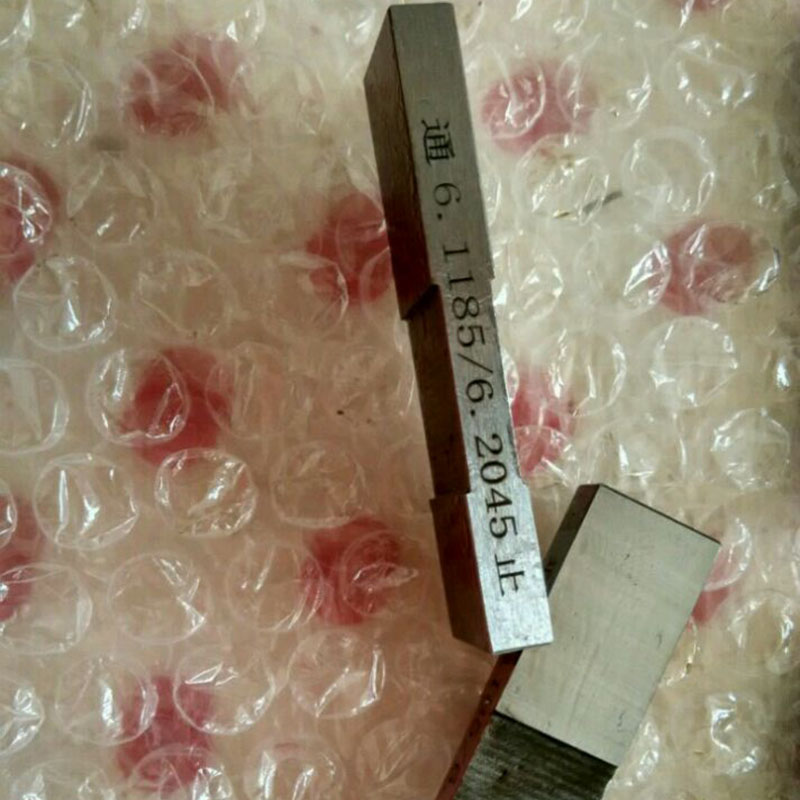
Understanding Thread Plug Gauge Types Thread plug gauges are essential tools used for measuring the size and quality of threaded holes in various manufacturing and engineering applications. These gauges help in verifying whether threaded holes conform to specified tolerances and standards. This article delves into the types of thread plug gauges, their applications, and the significance of choosing the right gauge for specific tasks. What are Thread Plug Gauges? Thread plug gauges are a form of customized measuring instruments designed to check the internal dimensions of threaded holes. They ensure that threads are cut accurately, fit properly, and meet the required specifications. These gauges are inserted into the hole to check for correct thread size, pitch, and form. There are two primary types of thread plug gauges GO gauges and NO-GO gauges. 1. GO Gauges - The GO gauge is used to check whether the threaded hole is large enough to accept the corresponding gauge. It indicates that the thread is within acceptable limits. If a GO gauge fits cleanly into the thread, it signifies that the hole can accommodate the intended fastener or bolt. - For example, in an engineering project, if a GO gauge passes smoothly into the threaded hole, it confirms that the production process has met the necessary standards to allow for proper assembly. 2. NO-GO Gauges - In contrast, the NO-GO gauge is designed to check that the internal thread does not exceed a specified size. If the NO-GO gauge can be inserted into the hole, it indicates that the threading is oversized and thus not acceptable for the application. - The use of a NO-GO gauge is crucial in ensuring quality control in manufacturing processes, as it prevents faulty components from making their way into assembly. Variants of Thread Plug Gauges Thread plug gauges come in various designs based on specific applications and thread types . Some common variants include - Unified Threads (UN) These are standard threads used predominantly in the United States. Various types of UN gauges exist, including UNJ for aerospace applications, which has an increased radius at the root for added strength. - Metric Threads (M) Commonly used globally, metric thread plug gauges are essential for applications dealing with international standards. These gauges check M-thread sizes, ensuring consistency across different regions and industries. thread plug gauge types - Acme Threads These are trapezoidal threads commonly used in power transmission applications. Specialized gauges are made for checking Acme threads due to their unique profile. - Whitworth Threads An older standard predominantly utilized in British and Commonwealth countries, Whitworth gauges verify the dimensions and pitches of these threaded components. Importance of Accurate Measurement Accurate measurement using thread plug gauges directly impacts the efficiency and safety of mechanical assemblies. Some key reasons include - Quality Assurance By regularly using thread plug gauges throughout the manufacturing process, companies can ensure that their products meet client specifications and industry standards. - Reduced Maintenance Costs Properly threaded components reduce wear and tear on machinery, leading to lower maintenance and repair costs over time. - Enhanced Product Longevity Components that are manufactured within the appropriate tolerances are likely to have better performance rates, maintaining their integrity and reducing the chances of failure. - Safety In critical applications, such as aerospace and automotive manufacturing, ensuring that threads are correctly sized is vital for safety, as improper threading can lead to catastrophic failures. Conclusion In conclusion, thread plug gauges are indispensable tools in ensuring the accuracy and integrity of threaded holes in various applications. Understanding the different types of thread plug gauges—GO and NO-GO, along with their specific variants—enables manufacturers and engineers to choose the right tools for their specific needs. With the correct gauges, businesses can enhance product quality, improve safety measures, and maintain high standards of precision in their manufacturing processes. As industries continue to evolve, the importance of adopting reliable measurement tools like thread plug gauges will remain a cornerstone of successful engineering practices.
about
curved laminated glass manufacturers
Understanding Limit Snap Gauges Precision Tools for Accurate Measurement In the realm of engineering and manufacturing, precision is paramount. One tool that has stood the test of time in ensuring dimensional accuracy is the limit snap gauge. This instrument plays a crucial role in quality control and assurance, helping artisans and engineers maintain strict tolerances across varied applications. This article delves into the fundamental aspects of limit snap gauges their design, functionality, and advantages in industrial settings. What is a Limit Snap Gauge? A limit snap gauge is a measuring tool used primarily to check whether an object conforms to specified limits of dimension. It is essentially a go/no-go gauge, meaning it has two distinct parts one for checking the upper limit and one for checking the lower limit of a dimension. Typically utilized in conjunction with other measuring tools, the limit snap gauge allows operators to quickly assess whether a part is within acceptable tolerances. Design and Construction At first glance, a limit snap gauge may appear simple in design, but it is meticulously crafted for accuracy and reliability. Generally, it consists of two major components 1. Go Gauge This section is intended to pass through the dimensions of a part that is within the specified tolerance. If the part fits through the go gauge, it indicates that the dimension is within the acceptable limits. 2. No-Go Gauge Conversely, the no-go gauge is designed to not fit within the specified dimension. If the part fits through the no-go gauge, it signals that the dimension exceeds the acceptable limits. These gauges are usually made from high-grade steel or other durable materials to withstand wear over time. Additionally, the contact surfaces are often finely ground, ensuring minimal friction and enhancing the gauge's longevity. Functionality limit snap gauge Using a limit snap gauge is straightforward, making it an invaluable tool on the shop floor. The operator begins by identifying the critical dimension of the workpiece that needs to be measured. Next, they will first check the part against the go gauge. If the part fits, the operator then proceeds to check it against the no-go gauge. If the part passes both checks, it is deemed acceptable. The efficiency of this measuring technique is clear. It allows for rapid assessments without the need for complex measurements, thus saving time and increasing productivity. Furthermore, such tools eliminate much of the uncertainty that may accompany traditional measuring methods, where subjective interpretation can lead to potential errors. Advantages of Limit Snap Gauges 1. Simplicity and Speed As mentioned, limit snap gauges allow for quick evaluations. They are user-friendly and can be utilized by operators with minimal training, enabling faster production cycles. 2. Reliability The design of limit snap gauges reduces the risk of measurement errors. With clearly defined go and no-go limits, users can trust in the accuracy of the measurements being conducted. 3. Cost-Effectiveness By ensuring that parts are produced within specified tolerances, limit snap gauges help reduce material waste and the costs associated with reworking or scrapping defective parts. 4. Versatility Limit snap gauges can be tailored for various applications across different industries—from automotive and aerospace to consumer goods manufacturing. They can be designed for a range of dimensions, accommodating diverse products and specifications. Conclusion In conclusion, limit snap gauges are indispensable tools in quality control and precision measurement. Their straightforward design, coupled with their rapid functionality, allows manufacturers to maintain stringent quality standards while enhancing productivity. As industries continue to evolve, incorporating advanced technologies and methods, the importance of effective tools like limit snap gauges remains unwavering. Embracing such measurement techniques not only fosters precision but also cultivates a culture of quality in manufacturing, leading to improved product reliability and customer satisfaction. As the manufacturing landscape grows increasingly competitive, the implementation of reliable measurement tools like limit snap gauges will continue to be a key differentiator for success.
-

High quality industrial productsagement

High quality industrial products
View Details -

Meet the diverse needs of customers

Meet the diverse needs of customers
View Details -

Strict quality control

Strict quality control
View Details -

Top raw materials

Top raw materials
View Details -

Trusted supplier

Trusted supplier
View Details
Our application

news and information
valvole ad acqua accese o spente
Valvole dell'Acqua Accese o Spente? Nel mondo moderno, l’acqua è una risorsa preziosa e limitata. La
Versatile Ground Anchor Solutions for Securely Supporting Adjustable Structures and Outdoor Installa
Understanding Adjustable Post Ground Anchors A Comprehensive Guide In the field of construction and

válvula de controlo
Válvulas de Controle Essencial para a Automação Industrial As válvulas de controle desempenham um pa
 English